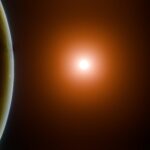
NASA’s Nancy Grace Roman Space Telescope successfully launched on August 30, 2026, aboard a SpaceX Falcon Heavy and is now on its journey into space. Roman is one of NASA’s flagship astrophysics missions and will fundamentally change how we survey the universe.
For SAAZ, there is a personal connection to this mission.
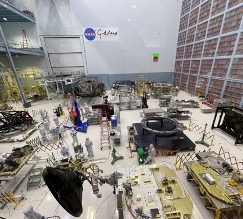
Roman’s Wide Field Instrument uses 18 large-format infrared detectors and sophisticated electronics to acquire and digitize their signals. A key technology behind that system is the ACADIA ASIC, developed specifically for low-noise control and digitization of cryogenic infrared detectors.
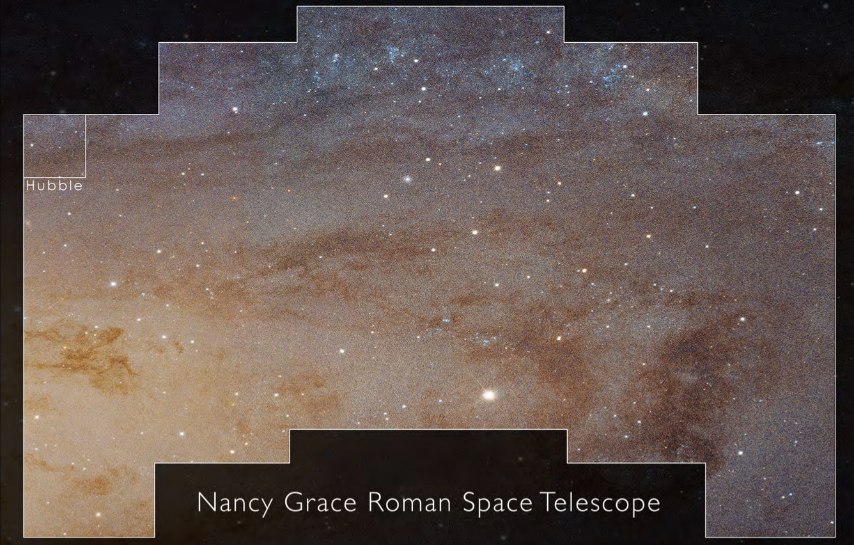
Roman’s WFI will eventually use this technology to capture enormous portions of the infrared sky. Its field of view is about 100 times that of some of Hubble’s widest imaging capabilities and about 200 times Hubble’s infrared WFC3 field, and NASA expects Roman to survey the sky up to 1,000 times faster than Hubble.
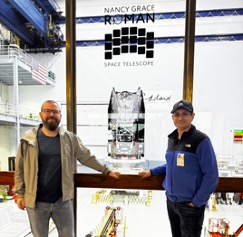
Markus Loose, our CTO, was the architect and lead designer of the ACADIA ASIC. Markus led the development of an extremely sophisticated mixed-signal device capable of simultaneously processing up to 40 detector channels while meeting the noise, power, cryogenic and radiation requirements of a flagship space mission.
Atul Joshi, our CEO, was also part of the ACADIA development team, with his primary contribution focused on architecting low-power analog-to-digital converter. He also worked with Markus to co-manage design, layout and verification resources and tasks.
The names of the people who helped create the Wide Field Instrument were engraved onto its Focal Plane Electronics cover. Markus’s and Atul’s names are on that plate, and that plate is now in space!
ACADIA integrates:
- up to 40 parallel detector analog channels
- programmable low-noise analog signal conditioning
- 16-bit ADCs for detector digitization
- programmable detector biases and references
- detector sequencing and timing
- onboard digital processing and data formatting
- radiation-protection features for the spacecraft environment
The technology has been published in a SPIE journal [1] and patented [2] by NASA, with SAAZ as a partner.
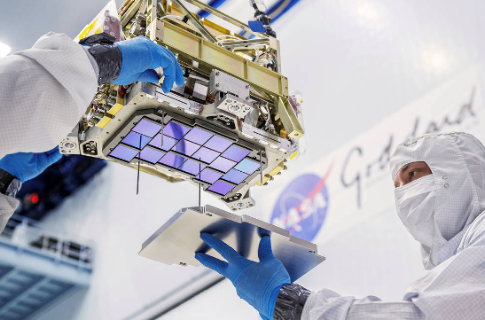
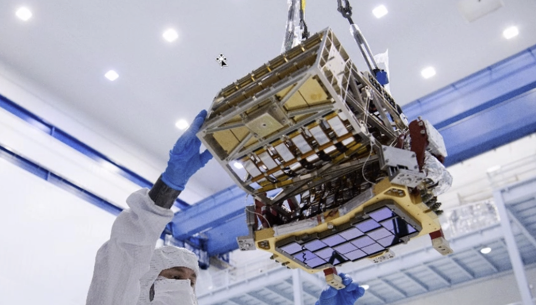
While this achievement belongs to a very large team across NASA, industry and academia, the credit for some of the key technical DNA behind this remarkable instrument goes to the SAAZ team.
Beyond the significance of the mission itself, Roman provides an important illustration of the depth of flight-program experience now resident within SAAZ. The work we are doing today builds on this heritage and gives us an opportunity to put many more SAAZ technologies into space in the years ahead.
External references
[1] ACADIA paper: Published ACADIA ASIC paper, SPIE
[2] US Patent 10,502,622: Detector control and data acquisition with custom application specific integrated circuit (ASIC)